The live countdown to the June solstice, when astronomical summer begins in the Northern Hemisphere, to the minute in your time zone.
--days
--hours
--minutes
--seconds
It’s today!
The next years
20262026-06-21
20272027-06-21
20282028-06-20
20292029-06-21
20302030-06-21
20312031-06-21
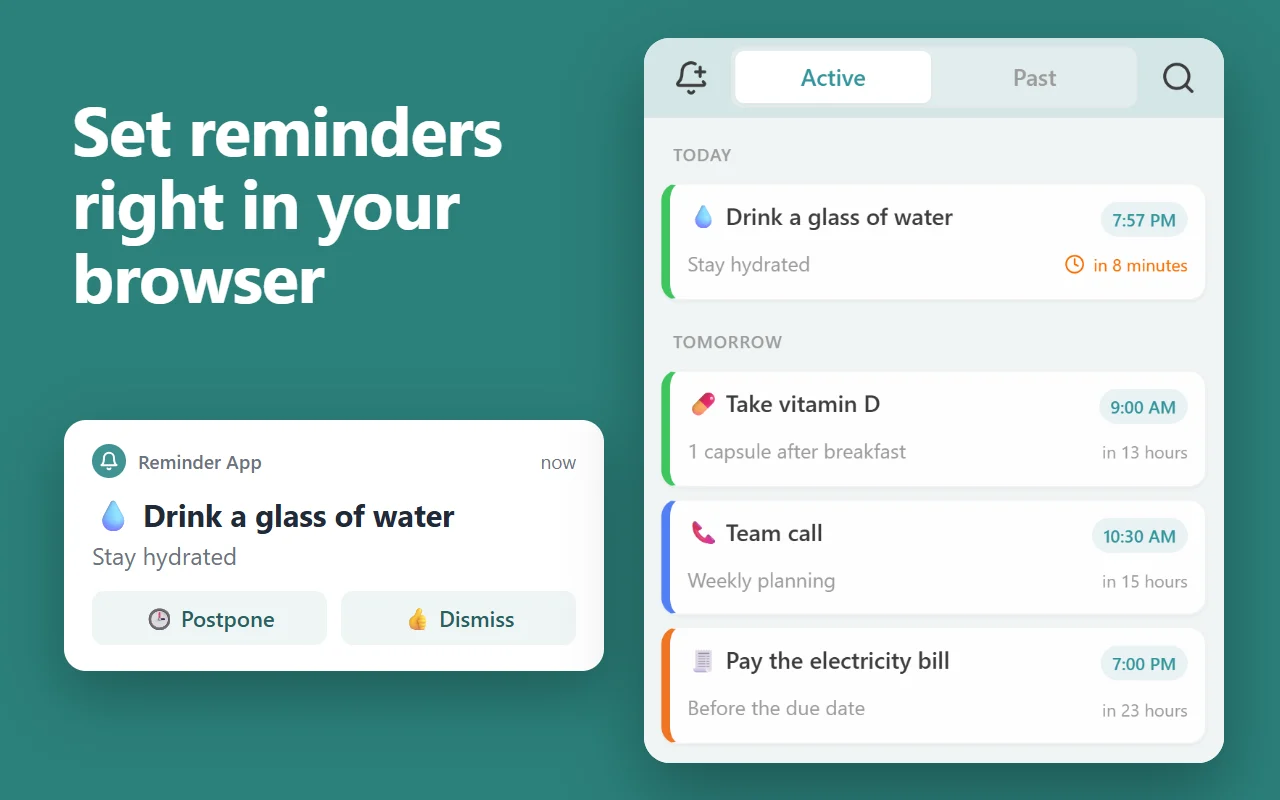
Reminder App for Chrome: reminders that ring with no tab open
This page rings only while it stays open. Our free Chrome extension keeps your reminders in Chrome’s side panel and rings each one with a notification and a sound whenever Chrome is running, on every computer where you’re signed in to Chrome with sync on.
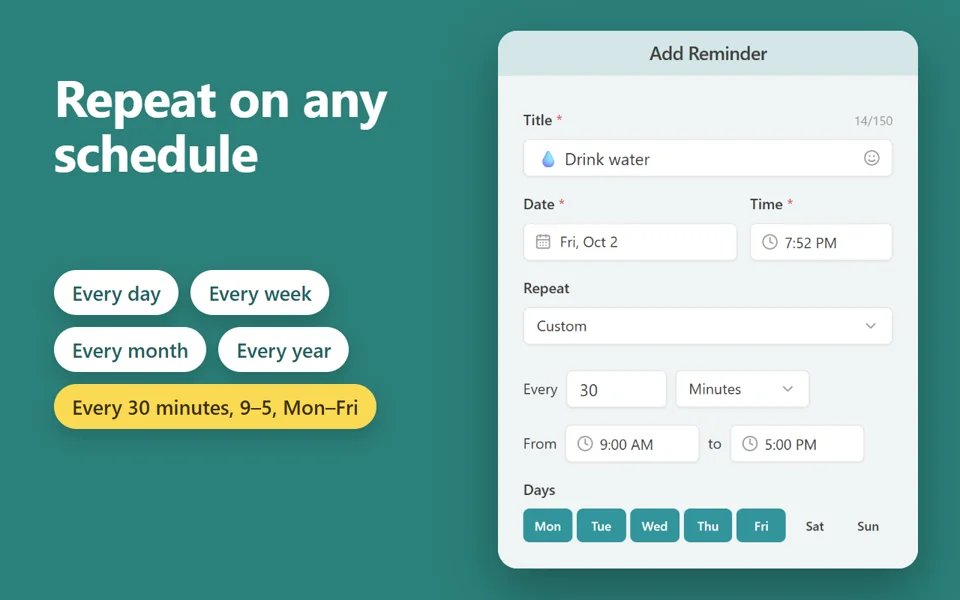
Repeats every day, week, month or year, on chosen weekdays, or every few minutes between set hours
Priority reminders ring until you answer; Postpone or Dismiss from the notification
Reminders missed while Chrome was closed show as one summary when it starts again
Right-click a page, a link or selected text to make it a reminder that opens the page
Free · 30,000 users · rated 4.8 in the Chrome Web Store For Chrome on Windows, Mac, Linux and Chromebooks.
The June solstice
The June solstice is the moment the Sun reaches its northernmost point in the sky: the longest day of the year
north of the Equator. The times above are worked out with astronomia, an implementation of Jean Meeus’s
astronomical algorithms, and agree with the US Naval Observatory’s to within a minute.
Questions and answers
When does summer start?
Astronomical summer starts at the June solstice, on June 20 or 21. Weather services use meteorological summer, which starts on June 1. In the Southern Hemisphere the June solstice begins winter.
What about summer vacation?
School holidays differ by school and country. Use the countdown to any date with your last day of school.